Every Vanuatu passport holder, upon entering or leaving the country, must present their passport to an immigration officer. It seems simple. But this routine check is governed by two key laws—the Immigration Act No. 17 of 2010 and the Passports Act No. 20 of 2009. While for most citizens it's a quick verification, recent regulatory shifts have introduced new documentation requirements that all passport holders, especially those from Citizenship by Investment programs, need to get right.
This guide breaks down what happens at the border, how to get a valid passport in the first place, and the recent changes that could affect your travel plans.
What Are the Rules for Entering and Leaving Vanuatu?
You can't just arrive anywhere. Every person, including all ni-Vanuatu citizens, must enter and depart Vanuatu only through an appointed port or airport, as the Immigration Act 2010 requires. This is about more than just convenience; it's how the government records all movements and maintains national security. For most international travellers, this means Port Vila's Bauerfield International Airport (VLI).
At the border, an immigration officer inspects your passport to confirm you are who you say you are. They then stamp the document, officially recording your entry or exit. This stamp is more than a souvenir; it's your official proof of legal entry and departure, which can be essential for proving travel history when applying for visas to other countries.
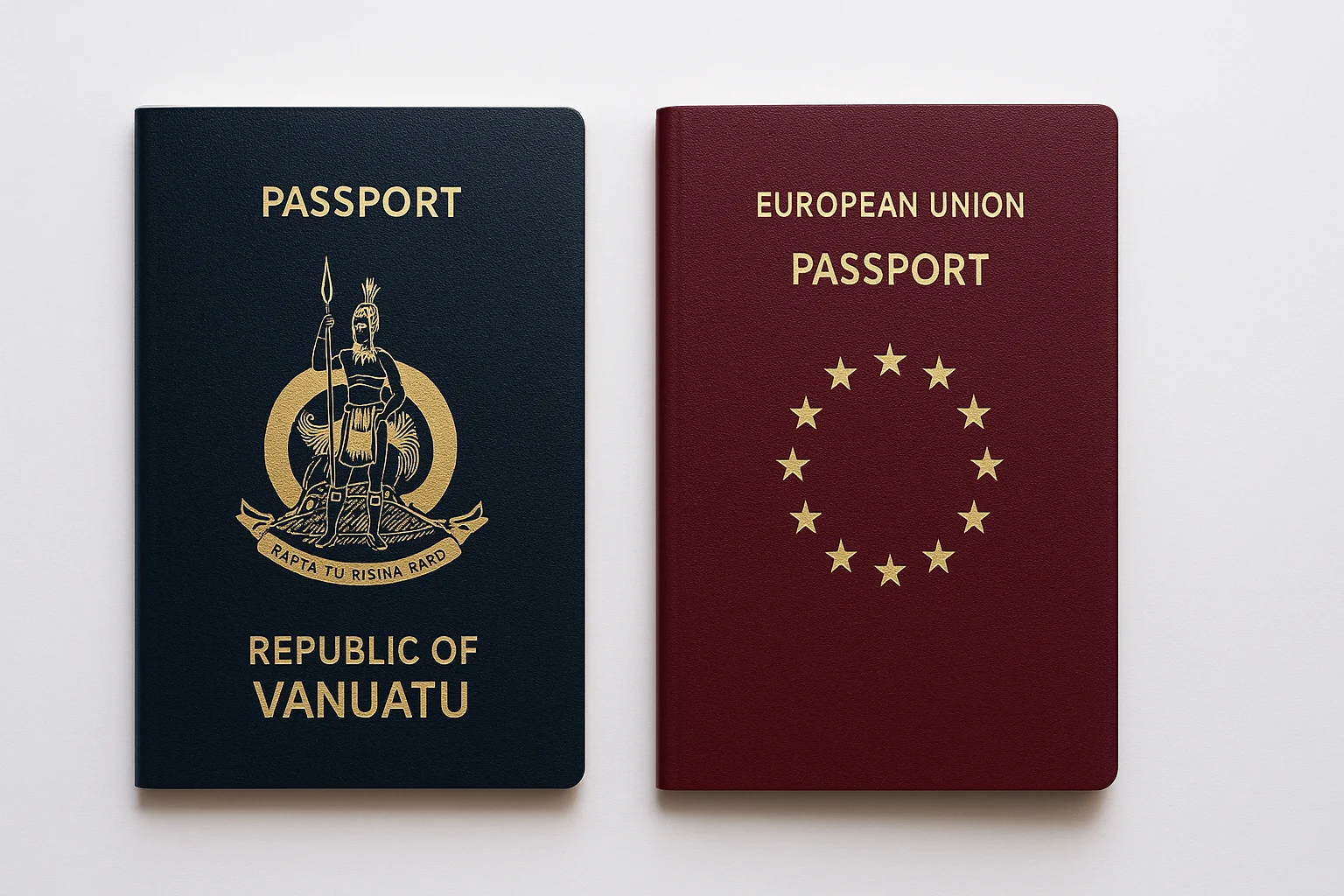
Your primary document is, of course, a valid Vanuatu passport book. But if you've acquired citizenship through an investment program like the Development Support Program (DSP), you should also carry your Citizenship Certificate and National ID card. In an era of heightened scrutiny, having these secondary proofs of status isn't just "recommended"—it can be the difference between a smooth passage and a lengthy, stressful series of questions from an officer.
Vanuatu is also updating its technology. At Bauerfield International Airport, don't be surprised to encounter biometric systems like facial scanners. These are being used to speed up identity checks for both arrivals and departures.
How Do I Apply for or Renew a Vanuatu Passport?
Only citizens of Vanuatu can get a Vanuatu passport. The application process is centralized and demands you show up in person at an official passport office. You cannot complete it entirely online or from overseas, a measure designed to protect the integrity of every document issued.
Step 1: Gather Required Documents
Getting your documents in order is the most important step. A single missing paper is the number one reason for delays. You will need:
- A completed passport application form and a citizenship declaration form.
- Your original birth certificate from Vanuatu. If you're a naturalised citizen, you must provide your original citizenship certificate instead.
- Two recent, identical passport photos meeting strict standards (clear, front-facing, white background, taken within the last six months). What can go wrong? Submitting old or non-compliant photos is an automatic rejection.
- Your old passport if this is a renewal.
- A signed declaration from an identity witness. This person must be over 18, have known you for at least a year, and sign the back of one of your photos.
Step 2: Lodge the Application and Pay Fees
You must submit your application personally at the Department of Immigration and Passport Services in Port Vila or at a designated provincial office. Fees are due upon submission. As of 2026, the government offers tiered pricing based on how quickly you need your passport.
| Service Level | Processing Time | Fee (VUV) |
|---|---|---|
| Standard | Up to 21 days | VT7,000 |
| Express | Up to 14 days | VT10,000 |
| Urgent | Up to 3 days | VT15,000 |
These fees are for the passport application itself and do not include the cost of acquiring citizenship.
Step 3: Await Processing and Check Status
After you submit your application, it goes into the queue. The official timelines are up to 21 days for standard service, but any mistake in your documents can bring the process to a halt. To check on your application's status, you'll have to contact the passport office directly and provide your receipt number. There is no online portal to track your progress.
What Recent Changes Affect Vanuatu Passport Holders?
Facing international pressure, particularly from the European Union, the Vanuatu government has significantly tightened its passport procedures. The reforms, started under the government of former Prime Minister Ishmael Kalsakau, aim to restore the security and reputation of the Vanuatu passport.
The National ID Card Mandate
A major change is the strict enforcement of the National ID card requirement. Immigration Regulation Order No. 112 of 2022 now mandates that all new citizens, including those who gain citizenship through investment, must apply for a National ID card. This isn't optional. It must be done within 28 days of receiving a citizenship certificate. Missing this deadline can jeopardize your ability to get a passport, as the ID card is now a mandatory prerequisite for any passport application or renewal. This creates a clear, verifiable link between the travel document and the national civil registry.
Impact on Citizenship by Investment (CBI) Applicants
These reforms add crucial steps for applicants to Vanuatu's CBI programs, like the Development Support Program (DSP) and the Vanuatu Contribution Program (VCP). The process is now more rigorous:
- Citizenship Approval: The applicant's file is vetted. Once approved, the donation is made.
- ID Card Issuance: The new citizen must then apply for and receive their National ID card.
- Passport Application: Only with the ID card in hand can the citizen finally apply for a passport.
This deliberate, multi-stage process was designed to counter concerns about due diligence and identity verification for economic citizens, ultimately strengthening the passport's global standing.
What Are Common Issues and How Can I Avoid Them?
The most common obstacle in the passport application process is incorrect or missing paperwork. Knowing the pitfalls is the best way to avoid them.
- Incorrect Passport Photos: Your photos must be recent, with a specific size and background. Your face must be clear, with no glasses. And one photo absolutely must be signed and dated on the back by your identity witness, who also writes your full name. Any deviation from these rules will get your application rejected.
- Missing Civil Documents: You need your original birth certificate from the Civil Status Office. Photocopies, even certified ones, won't be accepted. For naturalised citizens, the original citizenship certificate is required. If you've lost these, plan for significant delays, as getting replacements is a separate, time-consuming process.
- Lost or Stolen Passports: If your passport was lost or stolen, you must declare it on the form. Expect to provide extra proof of identity to prevent fraud. This also means you'll be issued a new passport book with a completely new number.
- Name Changes: If your name changed since your last passport (e.g., through marriage), you need to prove it with official legal documents. This might be a marriage certificate or a deed poll, and it must be submitted with your application if you want your new name on the passport.